908 SE Hawthorne Boulevard
Portland, Oregon 97214
info@clevercycles.com
503.334.1560
Mon-Fri: 11-6; Sat-Sun: 11-5

Family bike trip: Portland to Breitenbush and back again

10 August 2008 | Filed under Bicycling, Car-free, Gear, Longtails, Parenting, Portland, Stokemonkey

For our vacation, we the Fahrner family rode from our door in Portland up into the Cascade mountains along the Clackamas river, camped one night along the way, then spent four nights at Breitenbush Hot Springs. We rode home in one day. 193 total bike miles, 12,000’ of climbing, with a camping load and our 6-year old son in a child seat. This was an unforgettably wonderful experience for all of us: 4 days of total relaxation at the springs book-ended by 3 days and a night of bike camping.
loaded

breitenbushWe first visited Breitenbush last autumn, taking a Zipcar. The stay was far too short; we resolved to return. Breitenbush Hot Springs is an amazing place, a worker-owned cooperative on a beautiful site in ancient forest. The soaking pools are clothing-optional (mostly none). The food is organic vegetarian, no alcohol or caffeine. It’s off the grid: they generate their own electricity from the river and operate year-round on geothermal heat. They even run their own code-compliant sewage system for 190 people. There is no phone service apart from the office, no cell coverage: forget internet, radio or TV. Beside soaking, eating, and lounging about (I napped a lot), the hiking really can’t be beat, and there are usually new-agey kinds of workshops taking place for those so inclined. That’s not us, but I did indulge my inner hippie by slathering naked self head-to-toe in sulfurous volcanic mud, letting it bake on in the sun, and washing off in the c-c-c-cold swift river. Perfect!

We approached the idea of riding there tentatively, because though we ride every day, it has been some years since we’ve camped or even put more than 35 miles in a day on bikes as a family, much less nearly 200 heavily laden with lots of climbing mostly in mountain wilderness, beyond all services including cell phone signals. How would our son handle days straight sitting in his seat? But between the waste of parking a shared car at Breitenbush all week, our wanting to get some long-form biking in, and the need for blog fodder, well, we had to try it. Plus, we’ve needed to put in some extended test miles on new production elements of Stokemonkey, our elusive electric assist system specific to longtails, and this sounded like a good challenge.

It had never been entirely clear to me at what range Stokemonkey would become more burden than help. For utility hops of a few dozen miles or less in steep places like San Francisco or Seattle, it’s a no-brainer, but could we make the charge last this many miles in these mountains, with these loads, and still have Stokemonkey, with its weight and displacement costs, be a net advantage? I’m happy to report that we could. And that son is a champ in the seat for long hours, even offering back rubs. We’ll travel this way again.

We rode out about 18 miles along the Springwater Trail to join this route near Gresham, shared by Matt Picio at Bikely, complete with excellent cue sheet:

Clackamas Camping out to Breitenbush (route courtesy Matt Picio)
elevation

cycleanalystI figured out the total miles, then divided by the number of watt-hours we’d be packing in the batteries on each bike to come up with a per-mile power allowance of about 8 watt hours. It takes a lot of discipline not to open the throttle every time you get a little tired, but keeping under the allowance would assure that we’d have enough juice left to help with the tough climbing on the second day as shown in the elevation profile above. In practice, this meant using the assist only uphill and for the odd acceleration from a start, at least on the more climb-intensive outward leg. Coming home we could be more liberal with the assist.

Though each bike weighed nearly 150 pounds with cargo, 2 large NiMH battery packs each, passenger and all, we maintained an average speed of 11.7 MPH over the 193 miles, working no harder uphill than on the flats. Downhill, that extra weight is all gravy, which allowed us to ride home in a single easy 96-mile day. The bikes handled beautifully with all the weight; they are designed to.

climbing breakOf course, riding lighter bikes with lesser loads and no motor assistance is entirely feasible, and preferable from a simplicity point of view. It would also be slower and rather grueling on the steeper, longer inclines. For that matter, we could have hiked there and home if we had so much leisure. For us, for this trip, motor assistance made the difference between practical and appealing, and not.

In all, we used 1642 watt hours of assist each, so 3284 total over 193 miles, or 17 watt hours per mile for the 3 of us together. (Our capacity was half that; we recharged from Breitenbush’s small hydroelectric service.) Now, a single gallon of gasoline packs about 37,500 watt hours. So, if you come up with a car that gets 2,206 MPG with 3 occupants and camping gear in the mountains, you’ll have matched the energy efficiency of our quiet, cool-running, simple little human-electric hybrid system, now patented.

Packing was a bit stressful. I come from the minimalist school of camping, where you remove the staples from the teabags after discarding the 4 layers of extraneous packaging, and then decide that loose tea would be better yet, and conclude finally that you can do without tea for a few days. I shaved my head to sidestep that whole shampoo and comb quagmire. My wife, on the other hand, thinks nothing of packing a few books, four changes of clothing for five days, giant towels, etc. We compromised, sort of: if it fit on the bikes after the batteries, tools, charger, first-aid, water stowage, and other basics, I was fine with it. We’ll pack less next time. I packed some trash bags so in the worst case we could stash useless items in the woods at a marked spot for retrieval at a later date, including batteries if it came to that.

The ride up was pleasant after Estacada, if uneventful, and just plain uneventful before that. Having son narrating in his tireless way kept us entertained even passing through the town of Boring, Oregon.
lower clackamas
We camped at Riverside Campground, at mile 60-something the first night. This is the site of the last readily potable water along the route. We slept in two Hennessy hammocks, which I’d long been curious about as compact comfortable alternatives to a tent. Need to fine-tune the bottom insulation strategy for the cold dawn hours or colder seasons, but we’re sold. The sound of the rushing river lulled us quickly to deep sleep.
hammocks

The second day’s climbing was more intense, or we were sore, or both, but the weather was great and the scenery fantastic. It culminated at mile 18 in a wall of a climb to the pass that we dreaded to imagine hitting without Stokemonkey. The pass came sooner than expected, with a breathtaking view of Mt. Jefferson clad in glacier, and we then bombed down to Breitenbush with some euphoric whoops. I ran out my charge to a splutter along the loose gravel road just a mile or so from our destination.

parkingWe parked our bikes at the door of our cabin, which led to quite a lot of curious loitering by other visitors to the springs. But we learned quickly to stop telling people that we had biked there with child from Portland because it stopped conversations cold, as either a greener-than-thou affront or just too freaky. “Who drove the support vehicle?” A Dutch family we met there on the last day found out as we were leaving. They were incredulous. I admit that made me proud: Dutch people think we’re hardcore. At the same time, I wish more people understood that biking needn’t be some kind of enviro-martyr stunt, sport, fundraising strategy either personal or institutional, etc.

carl crosses

Homeward was mostly downhill, after the initial very sharp climb back up to the pass. The first couple hours after the pass were the nicest riding I’ve enjoyed in many years, with perfect light and warmth and a bike heavy enough to hold its momentum up nearly all the little rises after letting loose up to around 35 MPH on the longer descents. We whistled and sang in gratitude.

Our mood took a big hit at Austin Hot Springs, which is right alongside the road. We thought we’d lunch there and maybe take a dip where the hot vents mingle with the cold river water. We rolled up to the river’s edge, between trucks, and beheld a sickening spectacle: trash, trash everywhere. Brawndo cans and Doritos bags, used tampons and condoms, excrement-smeared toilet paper, giant bean cans, inflatable water toys, cassette tape fluttering, cigarette butts and beer bottles, some broken. Green trees sawed down and dragged halfway into fire rings. And there in the clear water, some yahoos had submerged a large roll of carpet and weighted it with rocks so bathers could avoid coming in contact with the riverbed. It was a crying Indian moment. Anger and shame drove us back to the road.

The Breitenbush community states that its primary purpose is to protect the springs and the land around them. Instantly, in view of the fate of Austin, we felt a wave of gratitude for that mission accomplished. I thought of some of the remarks I’d come across about Breitenbush being expensive or exclusive, or a bit precious, and I murmured “well thank god!”

Clouds rolled in low and it began to rain lightly. For the first hour or so it came down at a rate about equal to evaporation in our wool and peached nylon pants, but after a few more hours we were quite wet, though warm from exertion. My body proved an astonishingly effective rain shield for our son, even in his denim jeans. Beyond cell range, without radio we couldn’t guess whether these showers were going to blow past or compel us to set up a hasty camp. We had no raingear save those trash bags. We changed into dry wool and pressed on, just as the showers luckily subsided for a few more hours, catching us again only 15 miles from home on the Springwater.

flatBoth bikes acquitted themselves flawlessly, with zero trouble save a flat due to a heavy staple; we patched in place. We rode my 2003 Xtravois longtail, and a 2007 prototype of the Surly Big Dummy longtail. The Surly’s running a Shimano Nexus 8 gearhub with roller brake, the same robust setup as on all the Dutch bikes we sell. Xtravois has a Rohloff gearhub. Schwalbe Big Apple tires on both, 24” on the Surly. Both bikes have been “dutchified” to produce effective seat tube angles below 70 degrees, with short stems, swept bars, and sprung broad Brooks B67 saddles. I don’t think I’ll ever ride long distance any other way willingly, assisted or not. The only bicycle-specific items of clothing we brought were helmets.

We’re closed until Monday, 11 August!

1 July 2008 | Filed under Bicycling, Car-free, Entrepreneurship, Portland

Yes, we’re taking a vacation in the middle of the so-called bicycling season, 27 July to 11 August. Why? Because we are sold out of nearly all our most popular products! (Bakfietsen? Xtracycles? Child seats? Certain Bromptons, Retrovelos etc…) It’s a combination of some of our suppliers being sold out themselves, and others being simply too far away for timely resupply. Sales have exceeded our most confident hopes; thank you! Even though this is a forced break, we’d like to spin it as part of our attachment not only to practical, non-seasonal European bicycling sensibilities, but to humane European summer vacation norms. We need a rest, and then to work on some of our internal processes, train our newest people, and yes, give Stokemonkey some quality time behind closed doors.

We are reluctant to present bicycling for transportation as a response to hardship, because it is a pleasure and privilege. But gas prices are on so many lips, we can’t pretend that they have nothing to do with this year’s blistering business. Word is that some local bike shops who sell car racks and bikes appropriate to them aren’t doing so well. Easy driving is over. Few of our customers are refugees from rising motoring costs, because we live in a city. But everything’s connected, and even urbanites have family, or friends, or enemies addicted to the “freedom” of cars. Too many of them live in cities, too.

Some of our customers are extending the trend lines and seeing a near future in which utility biking is less a lifestyle preference than a key element of their own economic well-being. Others are awakening to an ethical awareness beyond the usual environmental, quality-of-life, and political considerations of not driving: the growing scarcity of motor fuel imposes an obligation on those who don’t need it not to use it lightly, regardless of their ability to pay for it. To our way of thinking, this includes most households in places designed before and without cars: places like Portland. We want our farmers to have motor fuel, and industry, and freight, and mass transit. But for mere personal or family transport in town, for those of you not yet incapacitated by decades of forfeiture: reclaim the legs and lungs of your ancestors for your one and only life ON YOUR BIKE!

Please note: we’re not quite sold out yet, nor closed for a few more weeks. Don’t make us lonely! Notably, we’ve got stock of Azor Dutch city bikes. One of our customers made the cover of The Oregonian one proud day recently, perched upon her Oma with her son off the back (hint: excellent posture):
from the cover of the oregonian

Introducing Retrovelo

8 April 2008 | Filed under Bicycling, City bikes, Entrepreneurship, Gear

Retrovelo is a small bicycle company in Leipzig, Germany, who in 2003 introduced a new style of bike: the Balloon Racer. These bikes are part city bike, part zero-generation mountain bike, and part, well, a whole lot of other elements borrowed from bikes over the last century. While “retro” in aesthetic, these bikes are not warmed-over anything, but new designs executed with exacting vision and technical innovations never before seen in production bikes. Clever Cycles is the first North American dealer.

They are stunning, easily among the most beautiful bikes I’ve ever seen. The step-through models could be pieces in a gauzy photo shoot with Marilyn Monroe. Confectionary or cupcakes with buttercream frosting come to mind, but those are sticky, weak and ephemeral, while these are timeless lugged cro-mo steel, tough and purposeful. The guys’ ones evoke lumberjacks and German shepherds and underwear (maybe that’s just me).

balloonThere’s almost a danger in this prettiness: you might think looks are their strongest point. In fact they ride marvelously. Weighing about 10 pounds less than similarly outfitted Dutch utility bikes, and supporting a sportier posture, these bikes scream fun, with wheelies and jumps feeling as natural as just gliding along. More than any other single thing, it’s the tires. Many people with a little knowledge of tires take one look at these fatties and assume that they must be slow. You know what they say about a little knowledge? Schwalbe re-introduced balloon tires in 2001 with the “Big Apple” after decades of obsolescence, and they did it really right, starting with light, supple casings that result in lower rolling resistance than many narrower, higher pressure tires (the data is buried). You can run pressures as low as 25psi, and just float over crummy pavement, rails, even the odd curb or flight of stairs. They are fast. Really. Take a test ride!

Context

Retrovelo designer Frank Patitz, for whom Schwalbe named the signature “Fat Frank” tires now appearing on a number of Retrovelo-inspired bikes, loves mid-20th-century American industrial design with a zeal found more often outside America than in. On his visit with us in Portland recently he’d stop at every old Nash Rambler, Ford Falcon and the like on the street to photograph them. (We were riding, of course; my eventual eye-rolling produced assurances that he doesn’t actually own a car, but just that he admires them as design objects.)

The bikey parallels of these old cars are the balloon-tired “clunkers” that, after 30-40 years of service (or sitting in people’s garages) got reborn as the first mountain bikes in Northern California, in the late 1970s. Retrovelos are partly an homage to these bikes. Hub gears, drum brakes, Brooks saddles and those distinctive swept handlebars are back! Here’s mountain bike pioneer Joe Breeze taking a Retrovelo down Repack, the legendary Marin County run:
Joe Breeze takes Paul down Repack

I confess to a certain curmudgeonliness about mountain bikes, or at least about the gap between how they are designed and marketed and how they are most often used. Mountain bikes are presented as toys you load up on cars to drive someplace free of cars, to escape. In reality, mountain bikes are the dominant utility bikes of America. Older, unsuspended ones especially, retrofit with lower-profile tires to bring down the bottom bracket, a rack, fenders, maybe some more comfortable bars please, clamp-on lights: these are the tough, lovable mutts of the American street. The proudest few ascend the karmic spiral of Craigslist and methamphetamine reincarnations to become Xtracycles. You have to love the punk-rock frankenstein aesthetic, or you don’t. What if bikes like this could be designed?

I see Retrovelos as a brighter, less ironic ending to the mountain bike story, or another fork of the story picking up from that same start, thirty years later. They take the essential fun, toughness, and comfort of archetypical mountain bikes, but instead of leaving all the useful, transport-oriented stuff to be bolted on haphazardly by the second or third owner, it’s designed in, gorgeously.

Models, specifications, prices

Our first shipment consists of models Paul and Paula, Max and Maxi, in 7 colors: black, olive, ivory, dusty rose, grass green, stone gray, and dove blue. All are complete with Nexus hub generator lighting front and rear, Roller (drum) brakes, rack, fenders, kickstand, bell. Paul is $2099; Paula $2149; Max $2399; and Maxi $2449.

Paul and Max frames are 56cm only (32” standover), suiting riders from about 5’8” to 6’2”; Paula and Maxi fit from about 5’2” to 5’11”.

Paul and Paula feature Shimano Nexus 8-speed “red band” (premium) hub gearing and an elegant chain guard. A first in production bikes, models Max and Maxi feature the Swiss Schlumpf High Speed Drive to extend the range of the 3-speed gearhub to 466%, comparable to some 27-speed drivetrains. You shift the Schlumpf by tapping the button in the middle of the cranks with your heel:

Want more pics?

A sale, and wool

1 April 2008 | Filed under Clothing, Entrepreneurship

Please help us end the freak snow, hail, and record low temperatures we’ve had here lately by stocking up on wintry clothing. We’re having 20% off clearance sale on select Ibex woolens, and on rain gear from Showers Pass and [sale over] Puddlegear. Showers Pass makes the best-reviewed cycling outerwear, filling the gap left by Burley’s exit from the market a few years back. Puddlegear is for kids, PVC-free, and tough. It’s not cycle-specific, but then neither are most of the clothes we carry. This sometimes causes confusion about whether we are a “real” bike shop or an eclectic clothing boutique that happens to have a lot of bikes, maybe as “lifestyle” props. We think there’s nothing so real as bikes that get ridden and clothes that get worn, every day year round and for all errands, instead of just on weekends or during “commute” hours. If it breathes well, doesn’t stink or bind, and keeps you warm in cold and cool in heat, it’s bike clothing in our book.

Which brings us to wool. My own conversion to wool occurred over a decade ago under the influence of Rivendell Bicycle Works’ Grant Petersen, whose writing on the subject convinced me to ride down the Pacific coast wearing basically nothing but scratchy fisherman’s underwear. It was awesome. Surly knows it too. Now I’m in wool from October to May as a rule, and occasionally even in the hottest weather. The scratchy part is usually overstated for macho value and often completely untrue, especially the superfine merino stuff that’s great for next-to-skin use year round. The initial cost of fine woolen clothing is often higher than other fibers, but its anti-stink qualities mean you wash it less, and the good stuff remains colorfast with good drape and no pilling for years and years: it’s good value.

Elsewhere

5 February 2008 | Filed under Bicycling, City bikes, Longtails, Portents

In anticipation of some free money being sent to most Americans to try to shake the US economy back into fizziness, we were joking in the shop with lines like “Save the economy: buy a Chinese plasma TV” or “Rescue America: buy a Dutch bicycle!” We think the last one, while ironic, at least wouldn’t represent blowing a bigger bubble as, for instance, the “patriotic” gas-guzzler buying spree that followed 9/11, back before oil had hit $100 a barrel and sprawled-out housing valuations tanked harder than urban. Well, then we saw an incoming link from peak-oil writer and subsistence farmer Sharon Astyk, to whom we have linked once before. Item #17 in Sharon’s Economic Self-Stimulus: Ideas for One Last Financial Orgasm amounts to “get a Dutch bike.” So get busy, consumatrons!

In the comments to Sharon’s post are a couple suggestions to get an Xtracycle instead. Same difference: we love them too. I’ve said before that dollar for dollar, pound for pound, inch for inch there’s no better way to carry lots of stuff or people on a bike than with a longtail like an Xtracycle. The word continues to spread. In Portugal, at a clever new bike business called Cenas a Pedal co-founder Ana Pereira has written the most comprehensive overview of longtails I’ve seen, tying it back in the end to Dutch tweelingfietsen. I don’t read Portuguese, but Google offers an intelligible translation. Good luck, Ana!

Rest in peace, Sheldon

4 February 2008 | Filed under Bicycling, Personal

Sheldon Brown died last night of a heart attack. He was 63.

I can’t think of anybody so generous with his knowledge in any subject. I doubt a month has gone by in the last dozen years that I haven’t learned something useful from Sheldon, either from his site or via email or even the phone. I also bought quite a few hard-to-find parts from his shop, Harris Cyclery. Most bikey people I know hold him in similar esteem: the man gave and gave and gave, with unflagging enthusiasm, humility, and goofy geek humor; he was a real mensch.

I finally met him at Interbike last year. I waited in a small huddle of people waiting to shake his hand, and thank him. I waited 40 minutes at least. I told him what we were doing with Clever Cycles. Surely this lover of internal gearing, Brooks saddles, and general steely goodness of the sort common to older English and most Dutch bikes would like to hear, but he began to look alarmed. All wonderful stuff, he agreed, but his experience had been that Americans associate utility bikes with yard-sale/stolen/dumpster-dive prices. Surely few were buying these gravity-enhanced bikes that cost more than $1000! I was happy to contradict him, and felt renewed gratitude to be living in Portland where, indeed, enough people “get it” for a shop like ours to do well. I wish he could see us now and later.

This was the second Interbike he needed an assisted wheelchair to get around. An uncommon form of multiple sclerosis made bicycling impossible for him in his latest years, but he bore even this cruel irony with dignity and grace.

My relaxing weekend down south or a truck, bikes, trains, a plane, and iPhone

22 January 2008 | Filed under Bakfietsen, City bikes, Entrepreneurship, Folding bikes

Last weekend we loaded up a 22” truck full of bikes and delivered them free of charge to their owners in the San Francisco area. It went well, mostly.

We made this trip because, frankly, our inventory of bakfietsen had become rather large just as the initial very hot sales rate in Portland cooled off with the weather. We figure that most any major metropolitan area has at least several dozen households who will leap for these things, at least once a few get rolling, and the “how can I get one of those?” referrals kick in. We wanted to jump-start that process.

We don’t think we’ll do this again, primarily because we’ve accomplished our goals of inventory adjustment and seeding future sales to the area. We delivered several bakfietsen to Jim in Chico, which he will sell [he sold out—ed].

Another reason we’ll not likely do this again is simply that it was a lot of work, and stressful. I had naively believed that I could leave early one morning in Portland and sleep that night in Berkeley, making a significant delivery and acquaintance in Chico on the way. (That’s like Amsterdam to Milan with a stop in, what, Strasbourg?) It turns out I spent two nights in motels on I-5, with associated distress from fast food, poor sleep amid dreams of snowy mountain passes and stolen trucks, and general exposure to the monocultural vacuity of the interstate highway system. I’ve driven maybe a dozen hours a year average in recent decades. Driving 4 days with a giant truck full of costly bikes on a tight itinerary has left me pretty done. I have a new appreciation, or should I say sympathy, for those who truck for a living. It’s hard.

Handing over the keys to the bikes was rewarding, as usual. The award for most enthusiastic bakfiets reception goes to C.B. in Palo Alto, who took a “pro forma” practice loop with one of her children before coming back and loading up four more people, including her husband off the back, making six in all. Much whooping and similar signs of glee ensued. I love to watch this stuff, and submit it as exemplary of the incredibly easy handling the van Andel bakfiets design offers even with the biggest loads. (We’ve ridden superficially similar designs and, really, this one’s in a class by itself.)

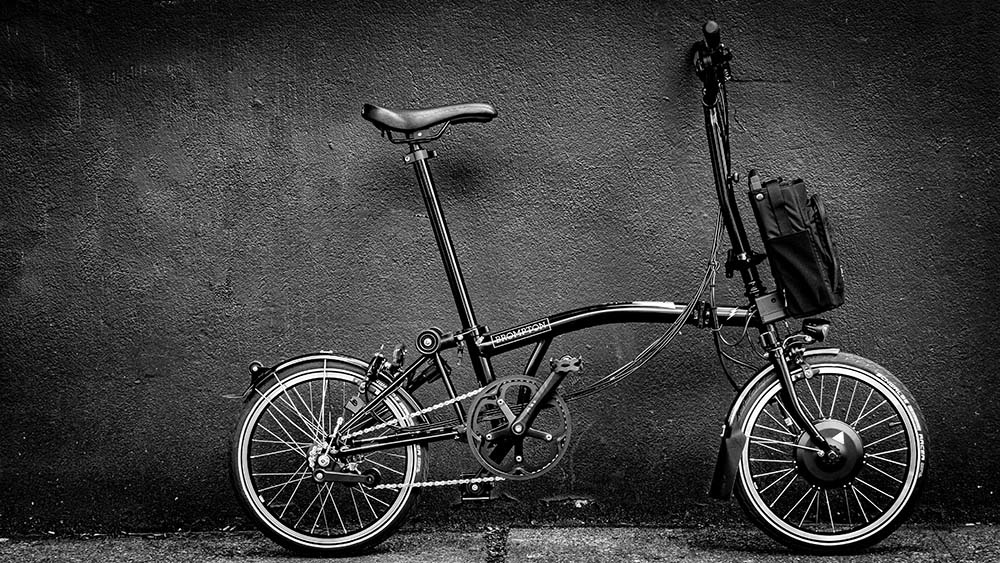
After C.B.’s delivery, with great relief I dropped off the empty truck after dark in a deserted industrial area. What then? Deploy the trusty personal jetpack: a Brompton folding bike! A Brompton is the hero of so many of my travels. With iPhone providing navigational support, I rode to the nearest Caltrain stop and headed north to San Francisco. On the train I assessed some bad news from a customer in the preceding day’s drop: an egregious mechanical problem, our fault. Customer lived near the Oakland airport I would be biking to in the morning, so I planned to stop to make things right on the way.

iPhone said I would need to wait at the Caltrain stop for a bus to connect further to BART that would take me back to Berkeley where I was staying. See, the Bay Area has many overlapping layers of independent, ill-coordinated transit systems, which means sometimes you have to buy 3 tickets, wait 3 times to go just a few miles. Nuts to that: I had Brompton! The bike creaked softly under my heavy load of smugness as I flew past the bus stops of SoMa to BART, feeling a little like Spiderman in street clothes flicking skeins of web between truck and train, train and tube, tube and dinner under the full moon.

The gods punish such feelings, of course. The next day, riding that clever British contraption in the cold rain to the Oakland airport while imagining myself in the role of Bond, James Bond, I got a flat in a cheery glass-strewn warehouse district. Who knew it rained in California? Q really must sort this puncture business. Could I patch it? Absolutely, and then I’d miss my flight. Soggy but unbowed, 5 strokes of the iPhone later a cab was on the way, and in 45 minutes I carried the bike onto the plane as usual, like Bond, James Bond.

Jim in Chico sent this in. I love the way the kids pop out like peas from a ripe pod:

Return of Return of the Scorcher

11 January 2008 | Filed under Bicycling, Car-free

If everyday practical bicycling had taken on political significance for you by the 1990s or earlier, in the US, chances are good you saw Ted White’s 1992 film Return of the Scorcher at a gathering of like-minded souls. It claimed the expression “critical mass” from nuclear physics for people riding bikes as part of traffic. It’s a yearning survey of the bicycling societies China and the Netherlands, both of which have powerfully shaped our own aspirations for reclamation of Portland from nearly a century of automotive disorientation.

I never saw Return of the Scorcher before it made its way to the interwebs last month. Now you can too. Learn from your elders. It’s 27 minutes:

Seven years later came We Are Traffic, documenting what Critical Mass had become. I rode in the summer 1997 San Francisco Mass that made international news when the police decided it was a threat, though I admit I was just trying to ride home when I found myself engulfed in it. I didn’t inhale. It’s 50 minutes. Enjoy:

Hat tip: Bikescape. Jon and his car-free family visited us many months back and told the story in a podcast.

California bakfiets invasion imminent

4 January 2008 | Filed under Bakfietsen, Entrepreneurship

Yes, it’s happening even in Los Angeles, a car-head dystopia I reserve the right to disdain since I grew up at the confluence of the 57 and 60 freeways. Check out Bakfietsen to the Future!, about an expectant father whose acquisition of a bakfiets instead of a second car just as oil is passing the $100/barrel mark is “a way to live my life on my own terms” and avoid reverting to the “chubby, hateful, angry” driver he once was. Your daughter will love it, Josef.

Josef got his bak from our friends at Rain City Bikes north of the border (it’s all good, but… but did we screw up somehow?). Our own north-south aid package, the San Francisco Bakfiets shuttle is finally coming together with free delivery scheduled 19-20 January. The truck is pretty full already with bikes ready to ride, but we can disassemble a bit and pack in a few more if you act fast. We are packing only pre-sold bikes, but perhaps if you show up at the to-be-determined pickup locations you can kick the tires gently to decide if you want one.

Holiday hours

19 December 2007 | Filed under Bakfietsen

We will be closed Christmas and New Year’s Day.

Carl sings in the bakfiets. Lately it’s been “Jingle Bells”—the “…Batman smells” variant. This is, after all, as close to a one-horse open sleigh as it gets this side of horses and snow. We need bells to complete the effect. I could use a carrot, apple, or maybe just some sugar.

carl in his sleigh

The Folz family knows where it’s at, too:
cocoon