


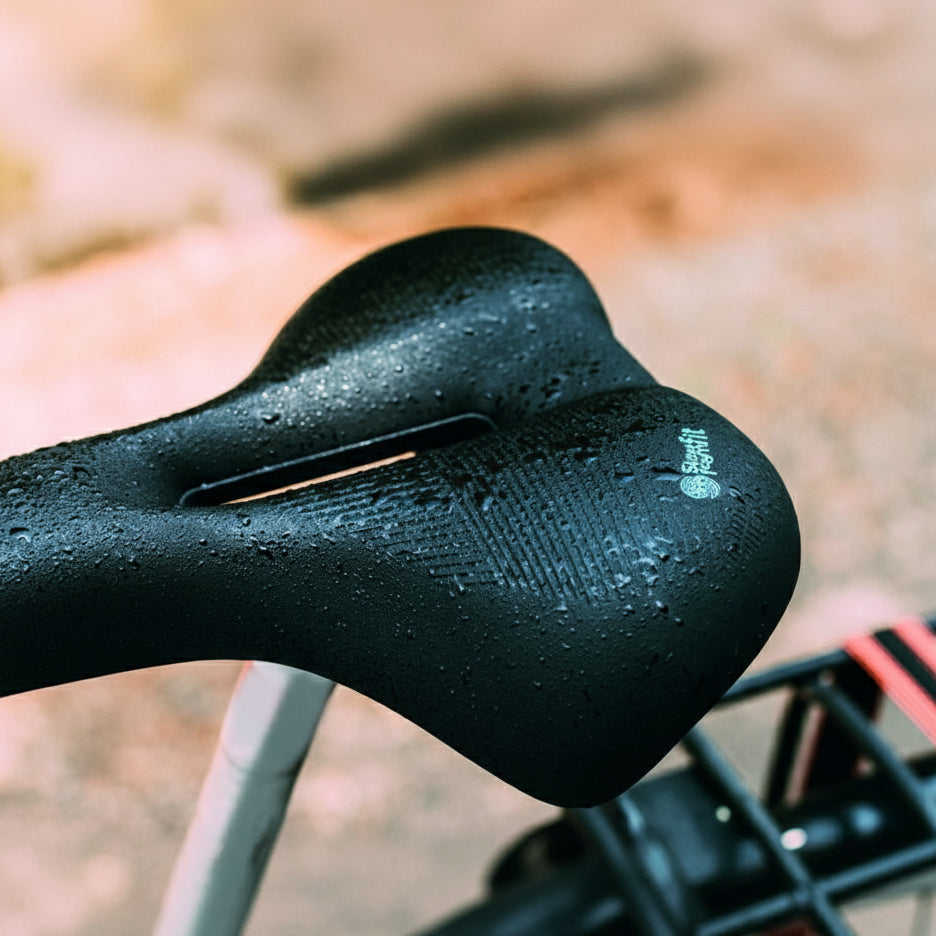
Comfort for Upright Riders
The Selle Royal Float Relaxed saddle is designed for riders with an upright posture — think city cruising, ebikes, and casual cargo bike missions. It uses slow-rebound memory foam that molds to your sit bones, distributing pressure instead of concentrating it in one spot.
An integrated comfort channel relieves perineal pressure, and the sealed top surface resists moisture and wear from daily use. It’s wide, stable, and built for riders who value support over aggressive performance.
At a glance
- Memory foam adapts to your shape for consistent comfort
- Relaxed geometry for upright posture and weight distribution
- Pressure-relief channel keeps circulation flowing
- Sealed cover resists moisture — ideal for all-weather commuting
- Compatible with most city and cargo bikes, including ebikes
Details that matter
- Riding position: Relaxed / 90° upright
- Shell: Flexible with integrated pressure relief
- Padding: Slow-rebound memory foam
- Cover: Water-resistant sealed surface
- Rails: Steel, standard fit
- Ideal use: City riding, ebikes, cargo bikes, daily commuting
Selle Italia Saddle Chart
Riding position changes everything
How far you lean toward the bars decides what saddle will actually feel good. The more you fold forward, the narrower the contact between your sit bones. Less upright = less padding. More upright = more surface to support.
| Position | Angle | Plain English | Saddle Needs |
|---|---|---|---|
| Athletic | ~45° | Folded forward, chasing speed and efficiency. | Narrower saddle with less padding. Soft-tissue pressure shows up mainly under aggressive effort. |
| Moderate | ~60° | Leaning forward but still upright enough to look around in traffic. | Medium-width saddle with balanced support. Common city and commuter posture. |
| Relaxed | 90° | Back straight, bars high — easygoing cruising posture. | Wider saddle with more surface to support the sit bones. No need for narrow race profiles. |
Why this matters
Your sit bones do the real work. As the torso rotates forward, the space between them narrows, so the saddle can be narrower. In upright positions, more surface needs support, so wider saddles feel better. Only in very sporty postures does pressure shift to soft tissues, which is when relief channels and careful fit start to matter more.