
-
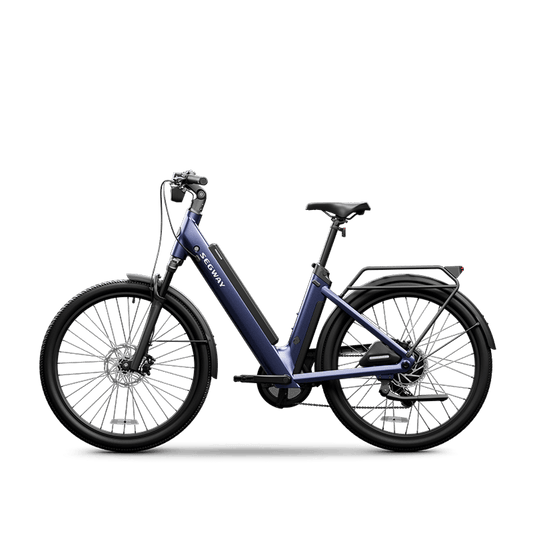
Segway MUXI Electric Bike
Vendor:SegwayRegular price $1,850.00Regular price -
Xtracycle Hopper - Electric Cargo Bike
Vendor:XtracycleRegular price $2,500.00Regular price -
Brompton Electric G Line 4 Speed e-Motiq
Vendor:BromptonRegular price $4,950.00Regular price -
Fuji Boulevard EVO Electric Bike
Vendor:FujiRegular price $2,000.00Regular price -
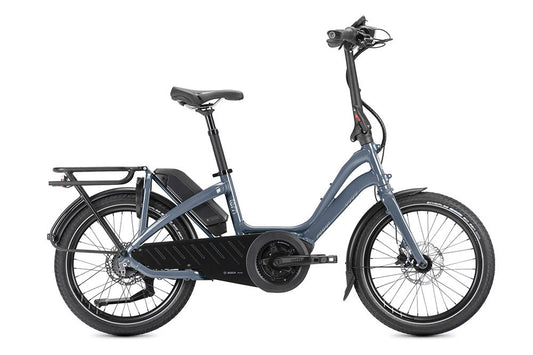
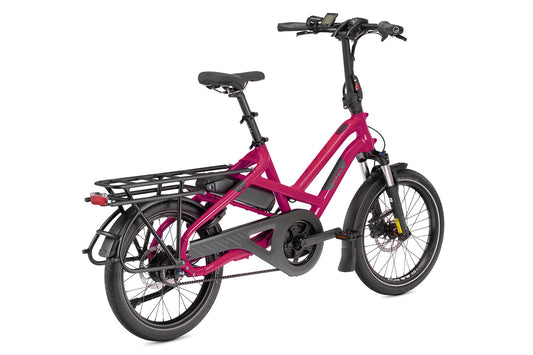
Tern Quick Haul Long D9
Vendor:Tern BicyclesRegular price $3,499.00Regular price$3,999.00Sale price $3,499.00Contact for ETA -
Segway Myon Electric Bike
Vendor:SegwayRegular price $1,999.00Regular price -
Tern NBD S5i Electric Commuter Bicycle
Vendor:Tern BicyclesRegular price $3,899.00Regular price$4,499.00Sale price $3,899.00Sale -
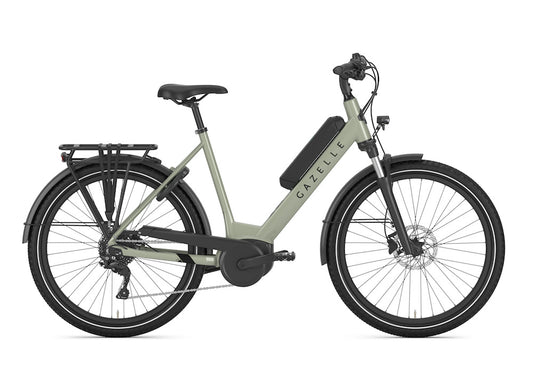
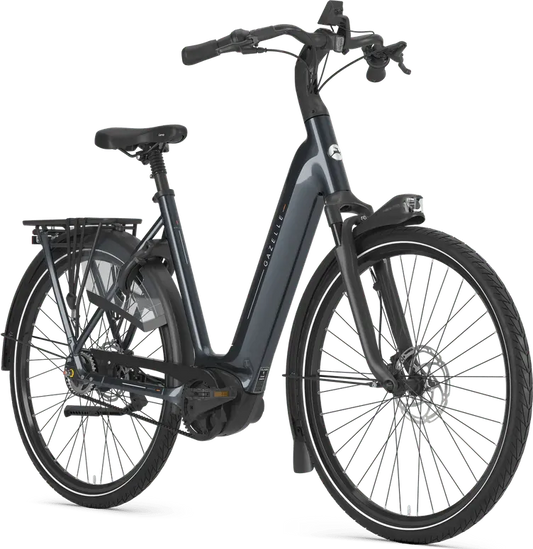
Gazelle Medeo T9 City - Bosch Smart System
Vendor:GazelleRegular price $2,599.00Regular price -
Tern NBD P8i Electric Cargo Bike
Vendor:Tern BicyclesRegular price $2,999.00Regular price$3,599.00Sale price $2,999.00Sale -
Gazelle Arroyo C5 Smart System Electric City Bike
Vendor:GazelleRegular price $3,999.00Regular price -
Gazelle Medeo T9 - Bosch Smart System
Vendor:GazelleRegular price $2,899.00Regular price -
Tern HSD Gen 2 P5i Electric Cargo Bike
Vendor:Tern BicyclesRegular price $4,499.00Regular price$5,299.00Sale price $4,499.00Sale









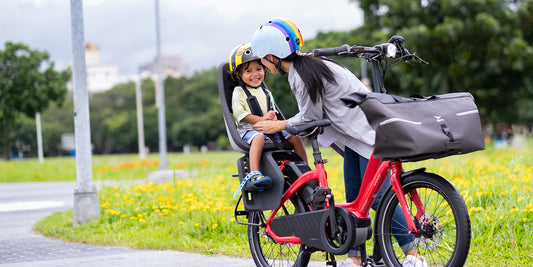



Bikes That Do More, So You Can Too
Everything You Wanted to Know About Ebikes (and a Few Things You Didn’t)
Questions?
Do I need a license or registration for an ebike?
Class 1 Electric Bike
Definition: Pedal-assist only, motor cuts out at 20 mph
License/Registration: Not required in most states
Notes: Allowed on most bike paths and trails
Class 2 Electric Bike
Definition: Pedal-assist + throttle, motor cuts out at 20 mph
License/Registration: Not required in most states
Notes: Some local trail restrictions may apply
Class 3 Electric Bike
Definition: Pedal-assist only, motor cuts out at 28 mph
License/Registration: No license or registration in most states, but extra rules often apply
Notes: Typically 16+ age requirement; helmet required in many states; may be restricted from bike paths
Electric Bike FAQs
Will an ebike make me lazy?
Sure — lazy about driving, parking, and sitting in traffic. On the bike, though, you’ll likely ride farther and more often than you ever did before. The motor just makes “yes” easier than “nah, I’ll drive.
How far can an electric bike go on one charge?
Most ebikes cover 20–50 miles per charge. Larger batteries and efficient riding can push that higher.
How fast can an electic bike go?
Most ebikes assist you up to 20 mph (Class 1 and 2). Class 3 ebikes assist up to 28 mph. Beyond those speeds, it’s all you and your legs.
How long do ebike batteries last?
A typical ebike battery lasts 3–5 years with regular use, which usually means 500–1,000 full charge cycles. A charge cycle refers to using 100% of the battery’s capacity — but that doesn’t have to be all at once. For example, if you go for a ride and use 20% of the battery, that’s only one-fifth of a cycle. Do that five times, and it adds up to one full cycle. Proper care — like not leaving the battery in extreme heat or cold and charging it regularly — helps extend its lifespan.
How long does it take to recharge the battery?
Most batteries recharge in 3–5 hours using a standard wall outlet. Bigger batteries may take longer, but you don’t always need to charge from empty — topping off works just fine.
Can I ride an ebike in the rain?
Yes. Ebikes are designed for real-world use, which includes rain. Electronics and batteries are sealed against the elements. Just don’t submerge the bike.
How much do ebikes weigh?
Most e-bikes weigh 40–70 pounds, depending on style and battery size. That’s heavier than a regular bike, but motor assist makes it feel easy once you’re moving. Some models come in around 35 pounds, while larger cargo e-bikes can top 100.
Cab I ride an ebike without the motor?
Absolutely. All ebikes can be pedaled like a regular bike, though the extra weight may be noticeable on hills. Think of the motor as an option, not a requirement.
Why are ebikes so expensive?
You’re paying for a high-quality motor and battery system — the most expensive parts of any ebike — and that’s where the difference really shows. A good ebike is built to last, with reliable components, solid service support, and a design that keeps you riding for years. That’s why we don’t sell or service the cheap online bikes that cut corners; they’re not worth your time or money. Most of the ebikes we carry use Bosch systems, which are trusted worldwide for durability and serviceability. Yes, the upfront cost is higher, but the savings on gas, parking, and car wear add up fast — and our customers put a lot of miles on their ebikes. That speaks for itself.
How much maintenance do ebikes need?
Ebikes require the same basic care as traditional bikes: checking tires, adjusting brakes, and keeping the chain lubricated. We also inspect batteries and motors during service. Because ebikes are a little heavier and usually ridden at higher average speeds, things like brake pads and chains may wear faster. But that’s not a drawback — it’s a reflection of the fact that ebikes get ridden more often and cover more miles. More riding is the whole point, and a bit of extra maintenance is a small trade-off for all the extra trips, smiles, and freedom they deliver.
What type of electric outlet do I need to have?
You don’t need anything special—ebikes plug into a standard household outlet (120V in the U.S.). Charging works just like a laptop or phone charger.
Do you ship ebikes?
It depends. We can ship ebikes within the U.S. following all carrier regulations for lithium batteries for certain brands. Shipping costs and assembly requirements vary by model—contact us for details on your specific bike.
Benefits of Pedal-Assist versus Throttle-Assist
-

Higher Quality
Throttle-assist ebikes usually rely on hub-drive motors, which are typically lower quality than the mid-drive systems used in most pedal-assist ebikes.
-

Extended Range
Longer battery life and range, with rider input improving efficiency.
-

Health & Exercise
Provides moderate to intense exercise, improving fitness and core strength.
-

Improved Comfort
Pedal-assist feels natural, smooths out rides, reduces fatigue.
-

Legal & Regulatory
Fewer restrictions and often classified as bicycles, allowing use on bike paths and in areas with stricter regulations on throttle-assist ebikes.
-

Enhanced Safety
Smoother, more predictable riding experience. Keeps you engaged, in control, and ready to respond to changes in your environment


